Useful Twi Phrases for Restaurants, Food and Eating in Ghana.
Eating in Ghana gives you an easy reason to use Twi. Learn how to ask what is available, choose a dish, talk about ingredients and taste, respond at the table and finish your meal without needing a long restaurant script.
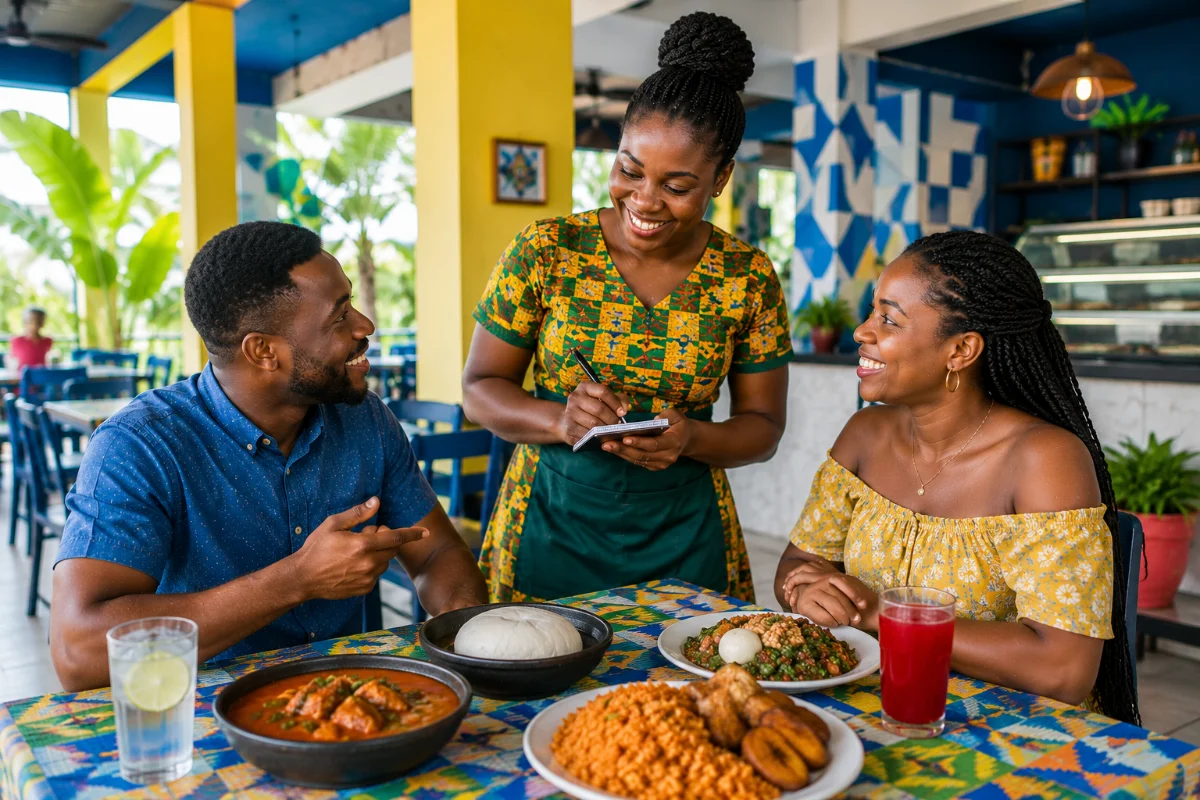
Prepare for the meal as a sequence: find out what is available, choose what you want, ask about the food, respond when someone speaks to you and know a few phrases for the table.
Start by finding out what is available
In a restaurant, chop bar or smaller food spot, the first useful question may not be “Can I see the menu?” It may simply be asking what food is available.
Ask what comes with the meal
Knowing the name of the main dish is only part of ordering. You may also want to know the soup, stew, meat or accompaniment that comes with it.
Choose your dish
Once you know what is available, make the order specific enough that the person serving you knows exactly what you want.
Ma me jollof ne akokɔnam.
Give me jollof with chicken.
Ma me banku ne nkwan.
Give me banku with soup.
Replace the food names with the dish you actually want. Learning this as a reusable pattern is more valuable than memorising a different complete sentence for every meal.
Talk about pepper before the food arrives
Ghanaian food can range from mild to very hot. If pepper matters to you, deal with it before the first mouthful.
Know what you are eating
Food conversations become much more interesting when you can ask about what is actually on the plate instead of only ordering by name.
Some of the most useful phrases happen after the first bite
Eating is social. Someone may want to know whether you like the food, especially when you are eating with Ghanaian friends or family.
Eating at someone's home is slightly different
At a home, food may be offered before you have asked for anything. That means the phrases you need are as much about responding to hospitality as ordering.
Woadidi? is worth recognising because food and hospitality can appear naturally in ordinary social conversation, not only at restaurants.
Know how to say you are full
This becomes especially useful when a generous host thinks the correct serving size is whatever still fits on your plate.
I am full.
Ask for the bill
At the end of a restaurant meal, you need to move from eating to paying. Keep that part simple too.
A simple restaurant conversation
The phrases make more sense when you hear them as parts of one meal rather than unrelated translations.
Do not learn food Twi only as names of dishes
Knowing fufuo, banku and jollof is useful, but conversation requires verbs, questions and responses. Practise what happens around the food.
Ask what food is available and listen for dishes you recognise.
Order one meal and specify the soup, meat or accompaniment you want.
Be ready to talk about the food once you begin eating.
Know how to say you are full and deal with the bill.
The phrases worth remembering first
What food do you have?
What soup comes with it?
Give me jollof with chicken.
It is very delicious.
I am full.
How much is the bill?
How Nkyea Twi helps you practise food conversations
Restaurant Twi becomes useful when you can hear the server's response, recognise a food name and produce the next phrase without rebuilding every sentence from English.
Practise the conversation around the meal, not only the food names.
Learn practical language for ordering, ingredients, eating and responding at the table.
Hear how the phrases sound before trying them in a restaurant or home.
Say food and restaurant phrases aloud and use speaking feedback as practice guidance.
Practise eating and ordering as part of situations a visitor may actually encounter.
Prepare for questions and responses from servers, hosts and people eating with you.
Revisit the phrases most relevant to your own eating habits and trip.
A good food-conversation target
Try to reach the point where you can:
- ask what food is available;
- ask whether a particular Ghanaian dish is available;
- ask what soup or meat comes with a meal;
- order one complete dish;
- ask whether the food is spicy;
- ask what an unfamiliar food is made from;
- tell someone that the food tastes good;
- recognise Woadidi? when someone asks whether you have eaten;
- say when you are full; and
- ask for the bill at the end of the meal.
Food gives you more than vocabulary practice. One meal can give you questions, answers, reactions and hospitality language in the same conversation. Learn that sequence well and your Twi starts becoming something you use around real people and real experiences.
Hear the menu, order the meal and know what to say at the table.
Nkyea Twi combines native audio, speaking practice, 2,000+ useful phrases, contextual Missions, smart flashcards and review tools to help you prepare for real food and restaurant conversations in Ghana.