Twi Phrases for Tourists Visiting Ghana.
You can travel through Ghana without speaking Twi, but a few useful phrases can make everyday interactions warmer and easier. Focus on the language you are likely to need in taxis, restaurants, markets, hotels and while asking for help.
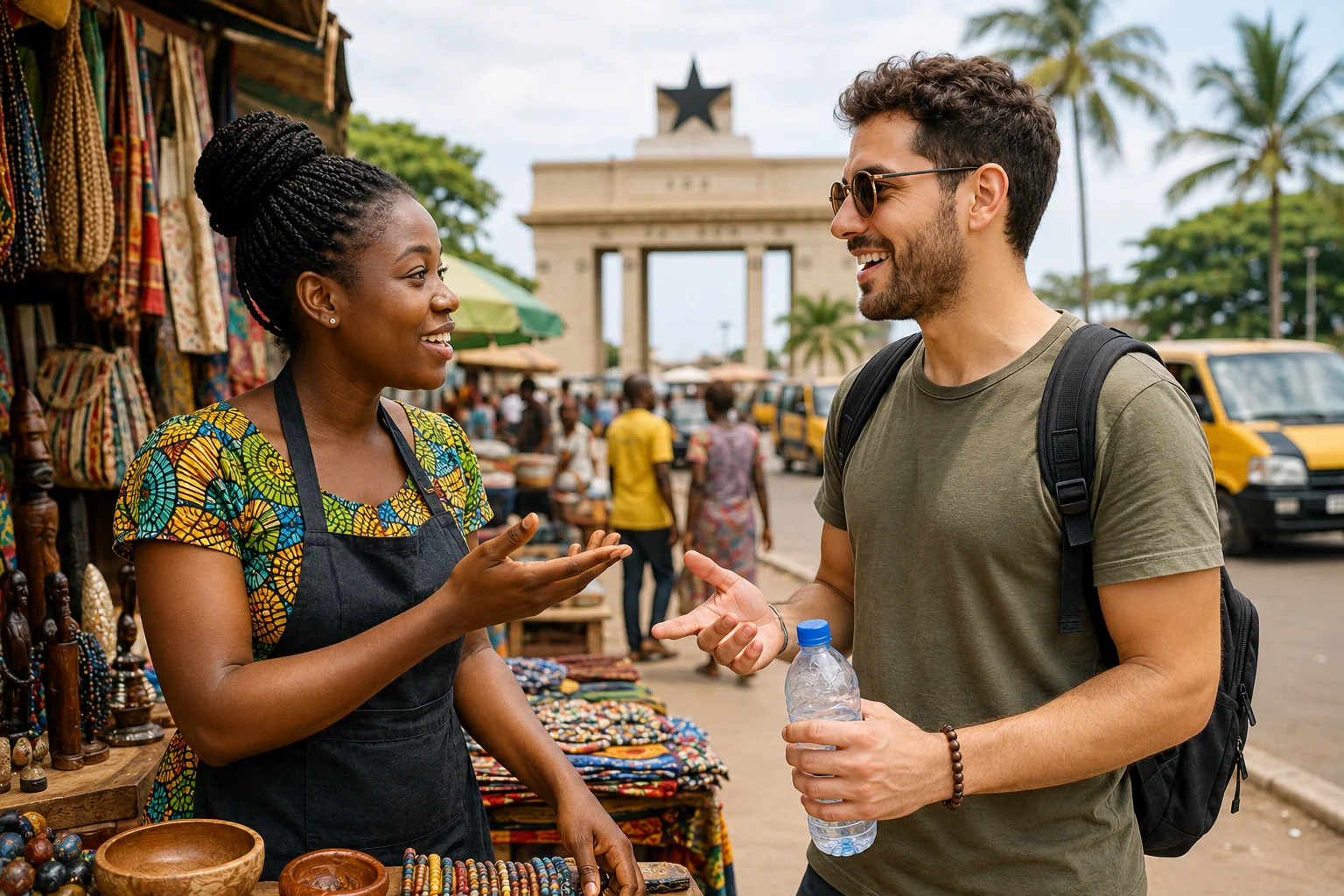
Do not try to learn every possible travel sentence. Learn a small set for the moments that repeat: getting somewhere, ordering food, paying, shopping and asking for help.
Start with polite travel phrases
A greeting and a little courtesy can make a practical interaction feel much more natural.
Getting a taxi or ride
Transport is one of the first situations where a visitor may find a few Twi phrases immediately useful.
Ask for directions
You do not need to understand a long set of directions. Start by learning how to locate something and recognise a few simple answers.
Ordering food and drinks
Restaurants, chop bars and family meals are good places to use simple Twi because the situation gives you plenty of context.
Buying something at a market
Markets are one of the most useful places to practise short Twi exchanges. Start with the price, quantity and whether you want the item.
At your hotel or accommodation
A visitor may also need simple language for asking about a room, water, Wi-Fi or another basic need.
When you do not understand
A tourist does not need perfect Twi. Knowing how to repair a conversation is often more useful than memorising another ten travel nouns.
Know how to ask for help
Keep a few simple phrases ready for situations where you are lost, need assistance or need someone to help you communicate.
A tourist conversation is usually a sequence
Instead of memorising phrases separately, practise the order in which you might actually use them. A taxi interaction could be as simple as:
Practise for situations, not a vocabulary test
Before your trip, choose the phrases that match what you expect to do. Practise them as small conversational routines rather than trying to memorise the entire page.
Pick one travel situation such as a taxi, restaurant or market.
Hear the phrases several times so you know what they actually sound like.
Practise both what you will say and what another person may ask you.
Try one or two phrases naturally when the situation appears during your trip.
What to learn before you arrive
Know how to say where you are going, ask the fare and tell the driver where to stop.
Learn how to ask for food, water and the items you want.
Be ready to ask the price and make a simple purchase.
Learn how to ask where something is and whether it is nearby.
Know how to say that you do not understand and ask someone to repeat themselves.
How Nkyea Twi helps you prepare for Ghana
Travel phrases become much more useful when you have heard them, spoken them and practised the responses you may receive.
Practise Twi for the situations you may actually meet in Ghana.
Learn useful language for transport, food, shopping, money, directions and everyday interaction.
Hear how phrases sound before you try using them with someone in Ghana.
Say phrases aloud and use AI-powered feedback as guidance while you practise.
Practise what you will say, what you may hear and how you can respond in travel situations.
Review important travel phrases until you can recall them without reading.
Prepare for exchanges rather than learning isolated translations.
A good tourist target
You do not need conversational fluency before visiting Ghana. A much more practical goal is being able to handle a few recurring travel situations comfortably.
Before your trip, try to reach the point where you can:
- greet and thank someone politely;
- tell a driver where you are going;
- ask the fare and tell the driver where to stop;
- ask where a place is;
- order food or water;
- ask the price of something at a market;
- ask for help if you need it;
- say when you do not understand;
- ask someone to repeat themselves or speak slowly; and
- recognise some of the replies you are likely to hear.
Even a small amount of Twi can change the character of a trip. Instead of using the language only to complete transactions, you begin creating small moments of connection with the people you meet.
Practise the Twi you will actually need on your trip.
Nkyea Twi includes native audio, speaking practice, 2,000+ useful phrases, a Visit Ghana Mission, smart flashcards and review tools for practising real travel situations before and during your visit.